
Why Manual Testing Still Matters in Modern QA: The Human Element AI Can’t Replace

“Manual testing is dead.”
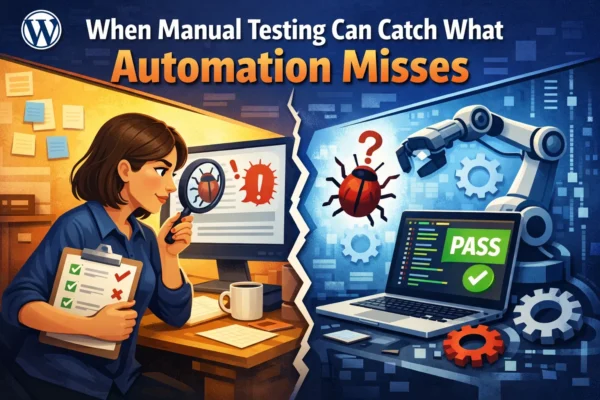
Honestly, if I had a pound for every time I’ve heard that declaration over the past few years, I’d be retired on a beach somewhere sipping mojitos. In 2025, with AI-powered testing tools delivering unmatched speed and scale, it’s easy to see why some might think human testers are heading toward extinction. But here’s the reality check we all need: while technology evolves at breakneck speed, software development is only getting more complex, and quality has never been more critical.
Let me break it down simply: AI is absolutely fantastic at handling the “what,” but it still struggles mightily with the “why” and “how it feels.” In my years working with QA teams across different industries, I’ve noticed a clear pattern-the most successful organizations aren’t the ones replacing humans with machines. They’re the ones intelligently building a hybrid QA strategy that blends automation’s raw efficiency with irreplaceable human insight and judgment.
Here’s why manual testing isn’t just surviving in the age of AI-it’s actually thriving as a critical pillar of modern Quality Assurance.
1. The “Human Touch”: Usability and UX Validation
AI-powered visual testing tools are genuinely impressive-they can spot a pixel-level layout shift or detect a color mismatch in mere seconds. That’s incredible technology. However, there’s something crucial they cannot do: tell you whether a feature is actually easy and intuitive to use.
Only a human tester can genuinely assess whether a workflow feels natural or if an interface seems cluttered and overwhelming. I’ve personally witnessed perfectly “bug-free” applications-ones that passed every automated test with flying colors-fail spectacularly in the market because the user experience was frustrating and confusing. Manual testing importance in UX validation simply cannot be overstated. Human testers and UX experts remain absolutely essential for evaluating the complete user journey from start to finish.
Practical scenario to consider: Imagine a new fintech application launching in the UAE market. AI can easily verify that the “Submit” button works correctly from a technical standpoint, but only a human tester can actually feel whether the navigation flow between currency conversion and money transfer is seamless or clunky. This nuanced, empathetic understanding of user experience is what ultimately separates good software from truly great software.
2. Exploratory Testing: Breaking the App in Unexpected Ways
Automated test scripts are, by their very definition, pre-scripted and predetermined. They follow identical paths every single time they run, which is excellent for consistency and reliability but absolutely terrible for discovering new, unexpected issues.
Exploratory testing is where manual QA truly shines in modern QA environments. Skilled test engineers leverage their creativity, domain knowledge, and critical thinking abilities to “break” applications in ways that no developer-or AI algorithm-ever anticipated or predicted.
The concrete benefit: This human-driven approach frequently uncovers “edge cases”-those rare, complex scenarios that automated scripts consistently miss. These edge cases are often the exact bugs that create the most frustrating user experiences when they slip into production.
Actionable tip for your team: Dedicate specific time blocks within your sprint cycles for “unstructured” testing sessions where your QA team is actively encouraged to deviate from standard test documentation and explore the application freely and creatively.
3. Strategic Oversight: The Hybrid QA Model
In modern QA practices, the conversation has fundamentally evolved beyond the outdated “AI versus Manual” debate. Forward-thinking teams are now implementing a Hybrid QA Model where AI automation handles the heavy lifting of repetitive tasks while humans provide strategic direction, contextual judgment, and creative problem-solving.
The Hybrid Division of Labour
| Feature | AI-Driven Automation | Human Manual Testing |
|---|---|---|
| Primary Focus | Routine, repetitive, data-intensive tasks | Creativity, context, and human judgment |
| Best For | Regression testing & parallel execution across multiple environments | Exploratory testing & comprehensive UX validation |
| Speed | Executes thousands of test cases overnight without breaks | Slower execution, but provides significantly deeper contextual insights |
| Maintenance | Self-healing scripts minimize ongoing maintenance overhead | Requires zero script maintenance or updates |
This balanced, strategic approach to software testing ensures you’re genuinely leveraging the best capabilities of both worlds rather than forcing an artificial either/or decision that limits your quality potential.
4. Real-World Efficiency: A Practical Case Study
I’ve witnessed this hybrid approach deliver truly remarkable results in practice. Consider this real example: Titani Global Solutions partnered with a technology company that was absolutely drowning in repetitive validation tasks. Their QA team was spending countless hours running the same regression tests manually, over and over.
By implementing AI-powered testing specifically for their regression test suites, they didn’t eliminate their QA team or reduce headcount-they liberated them to focus on what humans do best.
The tangible outcome? Manual test engineers finally had the bandwidth and mental space for genuinely meaningful work like comprehensive UX validation and complex scenario analysis. This strategic shift resulted in 80% faster feedback to developers and a massive, measurable drop in defects escaping to production environments.
When you leverage both automation and manual expertise strategically and intentionally, the results truly speak for themselves.
5. How to Future-Proof Your QA Team
If your team currently relies purely on manual testing processes for everything, you’re likely incurring unnecessary expenses and creating significant bottlenecks in your development pipeline. However, please don’t attempt to overhaul everything overnight in a panic-that approach rarely ends well.
Here’s how to intelligently modernise your modern QA approach without sacrificing the critical human element that makes testing truly effective:
Upskill your existing team: Actively encourage your manual testers to learn automation frameworks and familiarize themselves with AI testing tools. They should view AI as a powerful force multiplier that enhances and augments their role, not as an existential replacement threat.
Start strategically small: Select one low-risk module or feature and pilot an AI testing tool specifically for its regression test suite. Learn valuable lessons from this controlled experience before scaling up.
Choose intelligent, adaptive tools: Look for testing platforms with “self-healing” capabilities that automatically adapt to minor UI changes. This dramatically reduces the frustrating “fragile script” headache that plagues traditional automation.
Focus relentlessly on tangible ROI: Here’s a practical rule of thumb that works well-if you execute a specific test more than three times, it’s probably a strong candidate for automation.
Partner with experienced experts: If you need professional guidance implementing an effective hybrid testing strategy, explore professional QA services at QA and Code that can help you navigate this complex transition effectively and avoid common pitfalls.
The Bottom Line: Balance is the Future
Balancing AI-driven automation with thoughtful manual testing isn’t just another passing industry trend-it’s a strategic necessity for consistently delivering quality software in 2025 and beyond. While AI efficiently handles the routine checks and scales your test coverage exponentially across platforms, your human testers remain the irreplaceable guardians of user experience and the true masters of discovering those critical edge cases.
Technology will undoubtedly continue advancing at breakneck speed, introducing new capabilities we can barely imagine today. But there’s one fundamental truth that won’t change: software is ultimately built for people, by people, to serve people. As long as that remains true, we will always need people to test it with the empathy, creativity, contextual understanding, and critical thinking that only humans genuinely possess.
Ready to modernise your testing approach today? Start this week by identifying just one repetitive task you can confidently delegate to automation, and give your talented manual testers the freedom to do what they do best: think critically, explore creatively, and passionately advocate for your users’ experience.
The future of software testing isn’t about being forced to choose between human intelligence and machine efficiency-it’s about orchestrating them together in perfect, productive harmony.
Continue Your QA Journey
Want to dive deeper into modern testing strategies and best practices? Explore these valuable resources on effective QA implementation.
For expert assistance building your optimized hybrid QA framework, visit QA and Code to discover how professional testing services can accelerate your quality initiatives and transform your development pipeline.