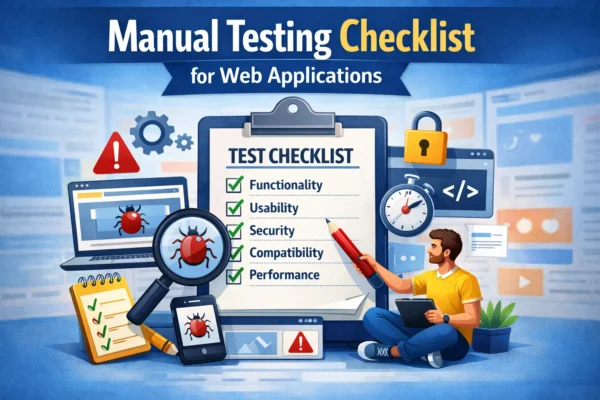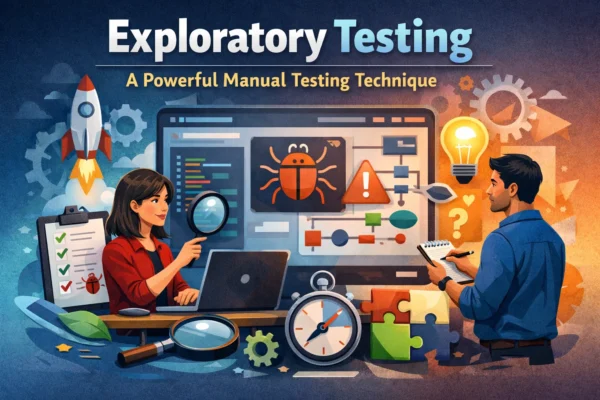

When Manual Testing Can Catch What Automation Misses – QA comparison and testing strategy
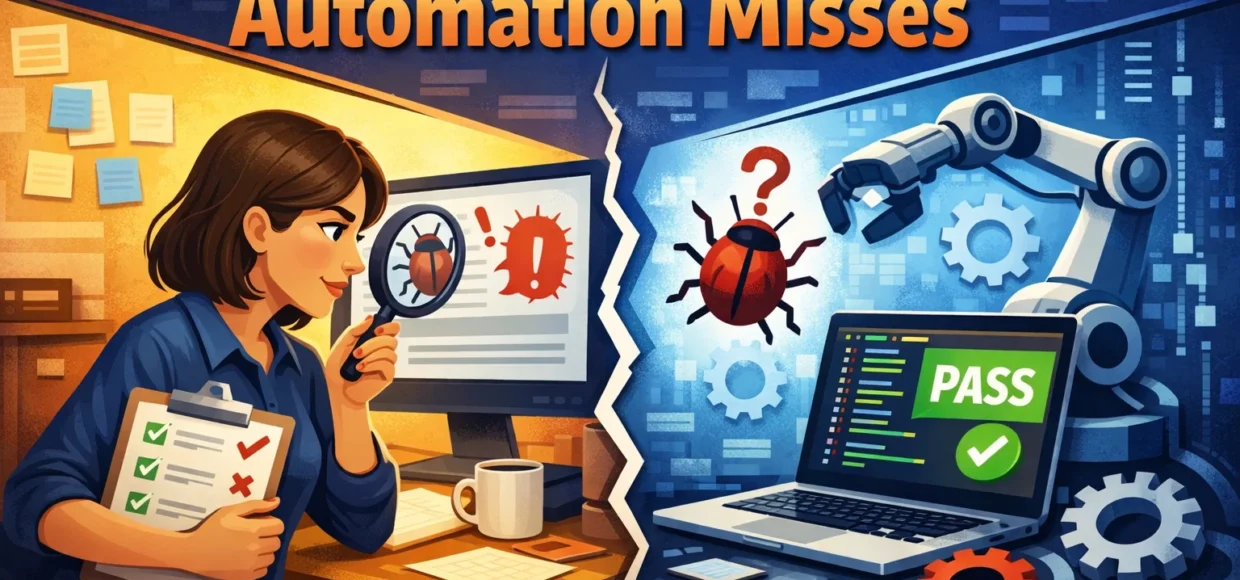
In today’s hyper-competitive software market, releasing a buggy product isn’t just a technical setback – it’s a direct threat to revenue, reputation, and user trust. As development cycles shrink and deployment frequency increases, quality assurance has evolved from a final-stage checkbox into a strategic business function. Let’s discuss QA comparison and testing strategy for a business.
Automation testing tools have become indispensable. They are fast, repeatable, and excellent for regression suites. But a quiet truth persists in the QA world: automation alone is not enough. Every experienced testing professional has stories of critical defects – the ones that slipped through a full suite of automated tests and were only caught by a sharp-eyed human tester clicking through a user flow.
This article explores exactly where the gap lies, what a well-rounded software testing services strategy looks like, and how partnering with the right QA testing company can be one of the smartest investments your product team makes.
💡
According to the IBM Systems Sciences Institute, the cost to fix a defect found after release is up to 100× higher than fixing it during the design phase. Early, thorough QA is not a cost center – it is risk mitigation.
Why Software Testing Is Critical for Business Success
Every software defect that reaches production carries a compounding price tag – user churn, brand damage, security liability, and engineering firefighting hours. Yet many organizations still treat QA as an afterthought, squeezed into the final sprint before launch.
of software projects fail due to poor quality & defects
of users abandon apps after encountering bugs
ROI on QA investment vs. post-release bug fixes
of vulnerabilities exploited within 30 days of disclosure
Effective testing protects your product across four critical dimensions: reliability, performance, security, and usability. Only a full-spectrum QA strategy addresses all four – and that requires both smart automation and expert human testers.
Manual Testing vs. Automation: Understanding the Real Divide
The debate isn’t manual vs. automation – it’s about knowing which tool to use for which job. The table below breaks down the honest strengths and limitations of each approach.
| Testing Dimension | Manual Testing | Automation Testing |
|---|---|---|
| UX Evaluation | ✔ Testers feel friction firsthand | ✘ Cannot assess feel or flow |
| Exploratory / Edge Cases | ✔ Adapts in real time | ✘ Limited to scripted paths |
| Regression Testing | ~ Slow at scale | ✔ Fast and consistent |
| Visual / Accessibility | ✔ Catches layout, contrast, ARIA | ~ Partial with specialized tools |
| Complex Business Logic | ✔ Contextual judgment applied | ~ Only what was scripted |
| High-Volume Repetitive Runs | ✘ Prone to fatigue errors | ✔ Ideal – 24/7 execution |
| New Feature Validation | ✔ Fastest feedback on new flows | ~ Requires script dev time |
| Agile / CI-CD Integration | ✔ Flexible and adaptable | ✔ Strong for pipelines |
⚠️
Over-relying on automation creates dangerous blind spots. A 95% test coverage score means nothing if the 5% missed includes a broken checkout flow, a critical accessibility failure, or a logic error in your pricing engine.
The most resilient QA strategies deploy manual testing services and automation testing services in tandem – each covering the other’s blind spots.
QA and Code’s Full-Spectrum Testing Services
QA and Code is a dedicated software testing company built to support startups, SaaS platforms, and enterprises that demand uncompromising quality. Their senior QA engineers bring domain expertise, proven methodologies, and modern tooling to every engagement.
Human-Driven
Manual Testing
Exploratory testing by senior QA professionals who apply real-world judgment to uncover UX friction, edge cases, and business logic flaws that scripts cannot detect.
Speed & Scale
Automation Testing
Custom-built test automation frameworks integrated into your CI/CD pipeline – enabling fast, reliable regression coverage across every release cycle.
iOS & Android
Mobile App Testing
End-to-end validation across real devices and OS versions – covering usability, performance, offline behavior, and platform-specific edge cases.
Backend Integrity
API Testing
Comprehensive validation of REST, GraphQL, and SOAP APIs – verifying contract compliance, error handling, authentication, and data consistency.
Load & Scalability
Performance Testing
Load, stress, and scalability tests that reveal exactly how your application behaves under real traffic spikes – before your users find out the hard way.
Risk & Compliance
Security Testing
Penetration testing, vulnerability assessments, and OWASP-aligned security audits that identify exploitable weaknesses before malicious actors do.
How Manual Testing Fits Into Agile Workflows
A common misconception is that manual testing slows down Agile teams. In practice, the opposite is true when integrated correctly. Here’s how QA and Code embeds quality at every sprint phase:
| Sprint Phase | QA Activity | Primary Method | Outcome |
|---|---|---|---|
| Planning | Test strategy, acceptance criteria review | Manual (collaborative) | Quality gates set upfront |
| Development | Unit test review, API contract validation | Automation + API Testing | Early defect detection in CI |
| Feature Complete | Exploratory testing, UX & accessibility | Manual Testing | Human blind spots addressed |
| Pre-Release | Full regression, performance & security scan | Automation + Perf + Security | Release confidence validated |
| Post-Release | Smoke testing, live flow validation | Manual + Automated | Live stability confirmed |
✅
Assign dedicated QA engineers to each Agile squad rather than using a centralized testing bottleneck. This shift-left model embeds quality from day one and dramatically reduces late-stage defect discovery costs.
Benefits of Partnering With a Professional QA Company
Outsourcing QA to an experienced software testing services partner offers advantages that in-house teams frequently cannot match – especially at the pace modern product teams require.
Why Choose QA and Code?
Not all QA partners are created equal. QA and Code differentiates itself through technical depth, process discipline, and genuine investment in client outcomes.
🏆
Senior-Level Expertise
All engagements led by experienced QA engineers – not junior contractors.
🔧
Modern Tool Stack
Selenium, Playwright, Postman, JMeter, OWASP ZAP – tailored to your stack.
🔄
Agile-Native Process
Seamlessly integrated into sprint workflows – no bottlenecks, no delays.
📱
Full Platform Coverage
Web, mobile iOS & Android, APIs, and backend systems tested.
📈
Transparent Reporting
Clear defect reports, test metrics, and risk summaries every cycle.
🌍
Scalable Engagement
Flexible models from ad-hoc sprints to long-term embedded QA partnership.
📌
QA and Code supports mobile app testing on real physical devices – not just emulators – ensuring your app performs correctly across the actual hardware your users own.
Conclusion: The Right Balance Wins Every Time
The most resilient, user-loved software products are built on a foundation of balanced quality assurance – where intelligent automation handles speed and scale, while expert human testers apply the contextual judgment, empathy, and curiosity that no script can replicate.
Exploratory testing uncovers the unexpected. Accessibility reviews protect your users. Business logic validation ensures your product does what you promised. Comprehensive coverage across APIs, mobile platforms, performance, and security means you ship with genuine confidence.
For startups, SaaS companies, and enterprises alike, partnering with a specialized QA testing company like QA and Code is one of the highest-leverage investments you can make in your product’s long-term success.
📚 References & Further Reading
Written by the QA and Code content team ·
All testing services referenced are provided by QA and Code ·
Contact us