
1. Introduction: Challenging the Binary Myth

In the high-pressure race toward continuous delivery and AI-integrated workflows, the “Manual vs Automation” debate has become a battleground of misconceptions. You’ve likely heard the provocative claim that Manual testing is dead” or the equally dangerous promise that “Automation is a silver bullet” for quality.

As a Principal Consultant, I see organizations treat this choice as a purely technical fork in the road when, in reality, it is a high-stakes business decision. Choosing the wrong balance directly impacts your burn rate, time-to-market, and brand reputation.

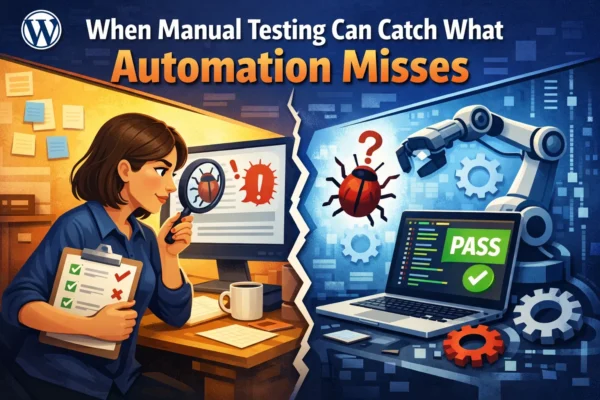
The truth is simple: manual testing and automation testing are not rivals. They are complementary forces forming an infinite loop of knowledge. Manual testing delivers discovery and human insight, while automation provides mechanical confirmation and stability. To build a resilient QA strategy, we must stop treating them as mutually exclusive and start seeing them as the “soul” and the “muscle” of quality.

2. Manual Testing: The Power of Human Intuition

Human-led testing is the strategic foundation of all quality efforts. At its core, manual testing is a human-centric discipline where testers act as the ultimate end-user advocates-leveraging cognitive sensibilities that no script can replicate.

In practice, the most critical bugs are rarely found by rigidly following a script. As highlighted in the Qt Paradox, the majority of meaningful manual testing breakthroughs happen when a tester deviates from predefined steps. This “human straying” is not a flaw-it is the essence of exploratory testing.

Whether it’s a UI misalignment that simply feels wrong or a user journey that makes no logical sense, human intuition catches nuances that deterministic code ignores.

I’ve seen teams miss catastrophic UX flaws because they automated too early. Manual testing is indispensable for:

  • Usability and accessibility assessments
  • Rapidly evolving features
  • Ambiguous or incomplete requirements

Humans uncover the unknown unknowns. Machines, once guided correctly, scale those findings.


3. Automation Testing: Mechanical Precision at Scale

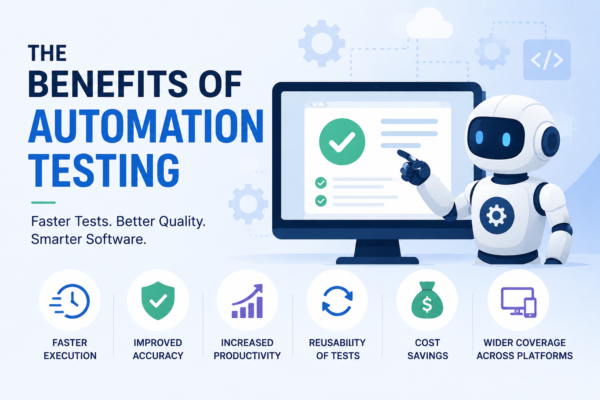
If manual testing is about discovery, automation is about confirmation. It is the backbone of engineering efficiency, focused on validating known behaviors with speed and consistency.

Using deterministic scripts and frameworks such as Selenium or Katalon, automation excels at executing repetitive and data-intensive tasks-without fatigue or variation.

Automation is non-negotiable for:

  • Nightly regression suites
  • Performance testing (load, stress, spike)
  • CI/CD pipeline integration

A strategic benefit often overlooked by leadership is knowledge transfer. Well-written unit and integration tests act as living documentation. For new developers, these tests become a blueprint of system behavior, accelerating onboarding far more effectively than static documents.

By handling routine checks, automation frees your most expensive assets-your people-to focus on creative, high-value work. But to do this well, teams must understand the critical distinction between testing and checking.

4. Testing vs. Checking: The Real Difference

The core divide is not manual vs. automation-it’s testing vs. checking.

  • Testing investigates the unknown
  • Checking confirms the expected
ParameterManual TestingAutomation Testing
AccuracyProne to fatigue; excels in judgmentHighly accurate within scripted rules
ROILow upfront; costly long-termHigh upfront; economical over time
ResultsOften delayed and informalReal-time dashboards and reports
ScalabilityLimited by human capacityEasily scales across platforms
UX InsightHigh; evaluates “feel” and flowNone; executes blindly
FrameworksTest plans and casesRequires structured frameworks
ProgrammingNo coding requiredSkilled coding required

Automation validates what you expect. Humans explore what you don’t.

5. When Manual Testing Is the Right Choice

Choosing manual testing is a strategic decision, not a compromise. In QA, man-hours are currency, and spending them on volatile automation is poor economics.

Stay manual when dealing with:

  • Early-stage products with unstable requirements
  • UX-heavy features involving layout, color, and interaction flow
  • One-off hotfixes where automation setup outweighs value

Attempting to automate a constantly changing UI is a maintenance nightmare. If you’re fixing scripts more often than finding bugs, you’ve already lost the ROI battle.

Manual testing remains the fastest and most responsive feedback mechanism during a product’s most volatile stages.

6. High-Value Automation: What to Script (and What Not To)

To avoid the Automation Paradox, accept one hard truth:

You cannot automate what you do not first understand.

Automation requires manual exploration and system modeling. Without it, the result is simply garbage in, garbage out.

Before automating, a test must be:

  • Objective
  • Repeatable

High-ROI automation candidates include tests that are:

  • Frequent – run every sprint or nightly
  • Data-heavy – large datasets or iterations
  • Time-consuming – impractical for humans
  • Cross-platform – multiple browsers, OSs, or devices

Regression and performance testing are ideal candidates. Conversely, automating a test executed once a year usually costs more to maintain than it saves.

7. Common Pitfalls: The “Red-Green” Trap

Quality failures are rarely tool problems-they are design and knowledge problems.

Common mistakes include:

  • Over-automation: Scripting one-off or cognitively complex scenarios
  • Flaky tests: Often blamed on tools, but caused by poor system understanding (page states, async behavior, API timing)
  • The Illusion of Green: Dashboards show all tests passing, yet critical bugs reach production because risks shifted and tests didn’t

A green dashboard does not equal low risk-it only means you’re checking the wrong things very efficiently.

8. Building a Balanced QA Strategy

High-performing QA organizations adopt a Hybrid Strategy, grounded in the Software Testing Life Cycle (STLC).

1. Prioritize

After requirements stabilize, identify automation candidates with the highest ROI-repetitive and data-intensive tests.

2. Integrate

Use low-code or no-code tools to allow manual testers to contribute to automation. This bridges communication gaps and ensures engineers understand the why behind each test.

3. Refine Continuously

Exploratory findings should feed automation. If a tester “strays” and uncovers a defect, that edge case should be evaluated for inclusion in the regression suite.

Treat test cases as reusable assets, reviewed for objectivity and relevance, and you’ll avoid the maintenance trap while building a sustainable quality culture.

9. Conclusion: Quality Is a Shared Responsibility

Manual and automation testing are two sides of the same coin-one discovers knowledge, the other preserves it.

Machines can check with unmatched speed and precision.
Only humans can truly test the soul of an application.

The real leadership challenge isn’t choosing between manual and automation-it’s balancing them. Are your people trapped in repetitive work? Are your scripts passing while user experience quietly erodes?

Evaluating that balance is the first step toward true engineering excellence.